
Last updated July 26, 2026
Garage Door Installation Warning Signs Every Homeowner Should Know
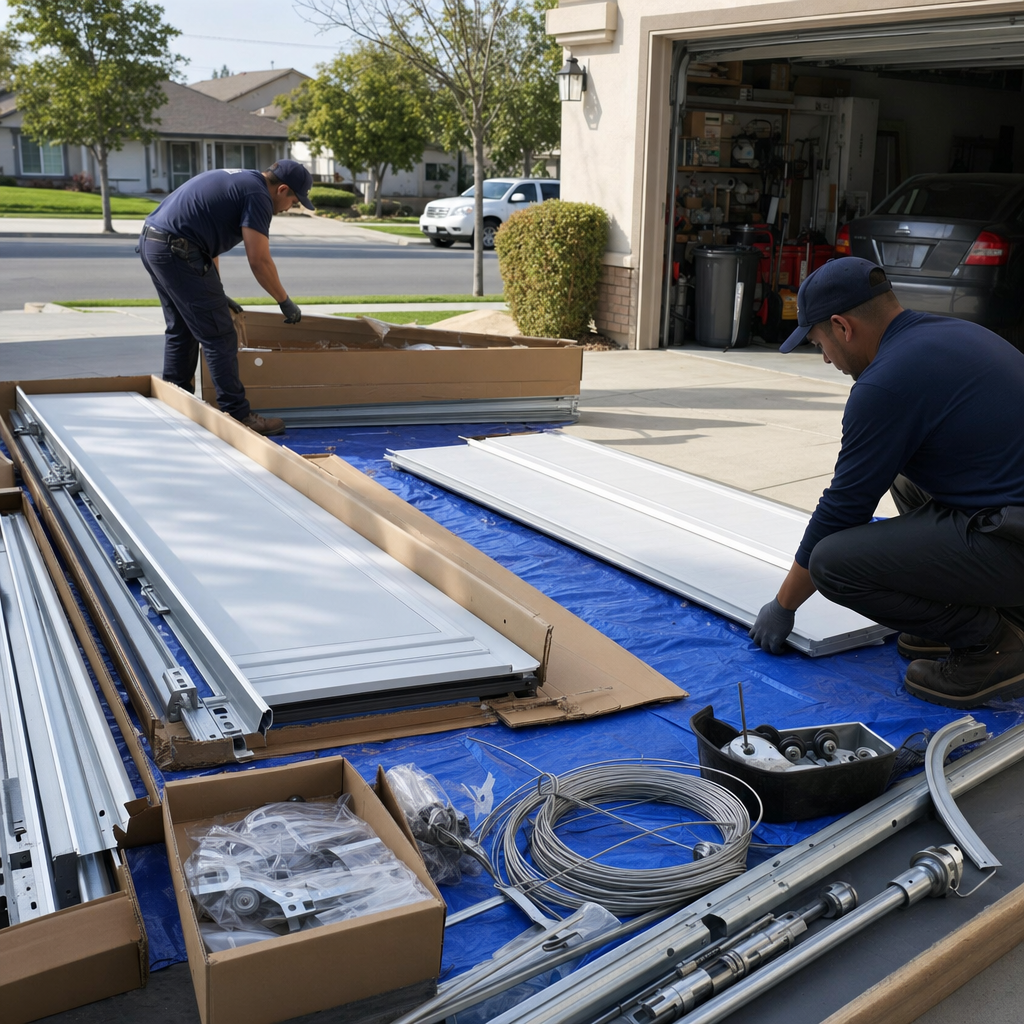
Most garage door failures in Los Angeles don’t happen on install day. They happen six months later, when the contractor’s phone is disconnected and the “warranty” turns out to be a handshake. In our 42 years of service, we’ve reinstalled more doors than we can count because the original installer cut corners that didn’t show up until the first hot Santa Ana wind cycle or the rainy season’s moisture swell. This guide will teach you to inspect our Garage Door Installation services before the truck leaves your driveway - while you still have leverage.
Quick Answer
A properly installed garage door should pass four same-day tests: it stays in place at waist height when disconnected from the opener, seals evenly against the frame with no daylight gaps, reverses immediately when the safety sensor is interrupted, and runs quiet enough to hold a conversation beside it. For ongoing care, follow our Garage Door Opener Maintenance Schedule: What to Do and When. If any of these fail, the installation is incomplete regardless of what the invoice says.
Table of Contents
- How to Do a Same-Day Installation Inspection
- The Sounds a New Door Should and Should Not Make
- Why an Uneven Reveal Is a Structural Warning
- Red Flags in Contractor Behavior Before Work Begins
- What a 90-Day Written Warranty Should Actually Say
- Los Angeles Climate and Code Factors
- Common Mistakes to Avoid
- When to Call a Professional
- Frequently Asked Questions
How to Do a Same-Day Installation Inspection
The technician is packing up. The door goes up and down on command. It is tempting to sign and move on with your day. Don’t. A proper inspection takes ten minutes and will reveal whether you received a finished job or a deferred problem.
We perform these checks on every Garage Door Installation in Los Angeles we complete, and we encourage homeowners to watch and learn. Here is the exact sequence, in order of priority:
- The Balance Test. Disconnect the opener by pulling the red release cord. Lift the door manually to waist height and let go. A balanced door stays put. If it crashes down or rockets up, the spring tension is wrong. This is not a minor adjustment. An unbalanced door strains the opener, warps the panels, and creates a crushing hazard. In Los Angeles, where many homes have aluminum or lightweight steel doors, improper spring calibration is the single most common install defect we see.
- The Gap Check. Close the door and inspect the perimeter seal in daylight. Look for horizontal light strips between the door bottom and the concrete, or vertical gaps where the door meets the frame. A 1/4-inch gap at the corner might look cosmetic, but it admits water, dust, and rodents. In the San Fernando Valley, where summer temperatures hit 110°F, that gap also bleeds cooled air and drives up utility bills. Run your hand along the seal - you should feel consistent resistance.
- The Auto-Reverse Test. Place a solid object, like a scrap 2×4, flat on the ground in the door’s path. Close the door using the opener. It must reverse immediately on contact. Then wave your leg through the sensor beam while the door is closing. It must reverse instantly. If the technician tells you to “adjust the sensitivity later,” stop. This is a life-safety device. California building code requires it to function at completion, not at your convenience.
- The Hardware Torque Check. Visually inspect every bolt on the track brackets, flag brackets, and opener mounting strut. They should be tight enough that the bracket does not shift when you grip and wiggle it. A loose track bracket will gradually wallow out its holes, and by month three your door will be grinding metal on metal. We use calibrated torque settings on every fastener - not “tight enough” - because we have seen what “tight enough” becomes after 500 open-close cycles.
Document anything that fails. Photograph gaps, record unusual sounds on your phone, and do not sign the completion paperwork until the technician addresses it or notes the exception in writing.
The Sounds a New Door Should and Should Not Make
A freshly installed door has a characteristic sound profile. Learning it now saves you from rationalizing problems later.
Normal sounds: A smooth hum from the opener motor, a brief mechanical click as the trolley engages, and a soft thump when the door settles into the closed position. Steel rollers on steel track produce a low, steady rumble. Nylon rollers are quieter - more of a whispered whoosh. Either way, the sound should be consistent from top to bottom of the travel.
Abnormal sounds that demand immediate attention:
- Grinding or metal-on-metal screeching. This indicates a track alignment issue or a roller riding the track edge rather than inside it. In Los Angeles, where seismic settling is common in hillside neighborhoods like Echo Park or Mount Washington, a door that sounds fine in the morning may grind by afternoon if the installer didn’t account for frame flex.
- Popping or snapping during opening. This is usually a spring binding in its cone or a cable wrapping unevenly on the drum. Both conditions will destroy the spring prematurely and can release stored energy without warning.
- Rattling that increases with door height. Loose hardware. The vibration of normal operation will tighten it further into failure, not resolve it.
- Opener straining or “labored” motor sound. The door is too heavy for the opener setting, or the opener is underpowered for the door size. A 1/2-horsepower opener on a solid wood door in Brentwood or Pacific Palisades - where custom carriage-house designs are popular - is a mismatch that burns out the motor in eighteen months.
We tell every customer: if you hear something that makes you pause, call us back. No charge for the recheck. A sound that “seems wrong but works fine” is your door’s warning system - one of the Garage Door Opener Warning Signs Every Homeowner Should Know - and ignoring it converts a free adjustment into a $400 repair.
Why an Uneven Reveal Is a Structural Warning
The “reveal” is the gap between the door edge and the frame molding, visible when the door is closed. Homeowners often dismiss an uneven reveal as cosmetic - the sort of thing a painter can hide. It is not. It is structural evidence of three possible installation failures, all of which worsen over time.
Twisted header or improper track plumb. If the left reveal is 3/8 inch and the right is 1/8 inch, the vertical track is not plumb. The door is being forced to travel in a parallelogram, not a rectangle. Every cycle adds lateral stress to the rollers and hinges. Within a year, you’ll have cracked hinge points and a door that binds at the same height every time.
Improper spring tension or mismatched springs. A torsion spring that is too strong on one side pulls that side of the door up faster, creating a diagonal twist in the closed position. The reveal narrows at one corner and widens at the opposite. This condition also accelerates cable wear and can throw a cable off the drum.
Substandard or modified panels. In Los Angeles, we encounter doors that were “field-trimmed” to fit a non-standard opening - usually by cutting the top or bottom of an end stile. This compromises the panel’s structural integrity and creates a reveal that changes with temperature and humidity. A proper installation uses the correct door size or a factory-ordered custom build, not a Sawzall adjustment behind your back.
Measure the reveal at four points: top left, top right, bottom left, bottom right. Variation should not exceed 1/8 inch. If it does, the installation is out of spec regardless of what the door looks like from the curb.
Red Flags in Contractor Behavior Before Work Begins
The worst installations we have corrected in Los Angeles shared one trait: the warning signs were visible before the truck arrived. Here is what to watch for during the estimate phase.
Vague part sourcing. The contractor cannot or will not state the door manufacturer, the gauge of the steel, or the origin of the springs. “Commercial grade” and “heavy duty” are not specifications. A 24-gauge steel door with a 10,000-cycle spring is a fact. If you cannot get facts, you are not getting accountability.
No written scope of work. Every installation should include a document stating: door model and size, opener model and horsepower, spring type and cycle rating, track configuration (standard, low-headroom, high-lift), and the exact work to be performed including haul-away of the old door. Verbal promises evaporate. Written terms survive.
Pressure to skip the permit. Los Angeles requires a building permit for garage door replacement when the door is part of the home’s fire separation (attached garage) or when structural modifications to the opening are involved. A contractor who urges you to “save money and skip the permit” is exposing you to code violations, insurance denial after a fire, and liability if someone is injured. We pull permits on every job that requires one, and we include the cost upfront - no surprises on the bill.
Payment demands before completion. Standard practice is a deposit (typically 25-50%) with balance on satisfactory completion. Full payment before the door is operational is not standard. It is a exit strategy.
No physical address or local history. A PO box and a cell phone are not a business. In a market like Los Angeles, where fly-by-night operators rotate company names every season, verify that the contractor has a local address and a record you can check. We have been at the same location since 1984, and our phone number has not changed in three decades.
What a 90-Day Written Warranty Should Actually Say
A warranty is only as good as its exclusions, and most installation warranties are written to exclude the failures they claim to cover. Here is what to demand, and what to reject.
Required language:
- Specific coverage period in days or years, not “limited lifetime” or “industry standard.”
- Explicit statement that labor, parts, and service calls are all included - not “parts only” with a separate trip charge.
- No requirement that the homeowner perform maintenance (lubrication, adjustment) to keep coverage valid. This is an automatic void clause that shifts blame for install defects onto the customer.
- No “original purchaser only” restriction if you plan to sell the home within the warranty period.
- Clear process for claims: who to call, response time commitment, and dispute resolution.
Red-flag language that quietly voids coverage:
- “Damage caused by normal wear and tear” - on a new installation, there should be no wear and tear for years. This clause converts the warranty into a decoration.
- “Damage caused by environmental conditions” - in Los Angeles, this could exclude every failure, since sun, salt air, and seismic movement are all “environmental.”
- “Installer reserves right to determine if defect is covered” - this grants unilateral denial power with no recourse.
- “Warranty valid only if door is serviced annually by [company name]” - a revenue lock-in, not a warranty.
Our 90-Day Done Right Promise states in writing: if the work is not right, we return at no charge. No paperwork to file, no dispute process, no arguing. We put it on every invoice because we have seen what the alternative looks like.
Los Angeles Climate and Code Factors
Los Angeles presents specific conditions that a generic install manual does not address. A contractor who treats your job like it could be in Cleveland is a contractor who will be back, or more likely, won’t.
Seismic requirements. Los Angeles is in seismic zone D, and garage doors in attached garages are part of the home’s structural envelope. The track must be secured with proper fasteners into the framing, not just drywall anchors. We have found track brackets held by plastic wall anchors in homes from Culver City to Alhambra - a failure point in any significant shaker.
Thermal expansion. A steel door in direct San Fernando Valley sun can expand 1/4 inch in width between morning and afternoon. Installers must set side clearances to accommodate this, or the door will bind and pop rollers. We adjust clearances based on door material and sun exposure, not a one-size-fits-all factory spec.
Coastal corrosion. Within five miles of the Pacific - Santa Monica, Marina del Rey, San Pedro - salt air corrodes standard zinc-plated hardware in two to three years. We specify galvanized or stainless track hardware for these installations, and we stock both on our trucks.
Hillside settling. In hillside neighborhoods from the Hollywood Hills to the Palos Verdes Peninsula, garage structures move. A door that is “perfectly” plumb to a settled frame is actually out of plumb to gravity, and the opener will strain. We check frame squareness independently and shim tracks to true vertical, not just to the existing opening.
Fire separation code. Attached garages in Los Angeles must maintain fire-rated separation from living spaces. A door with a broken bottom seal, a missing firestop, or a pet door installed after the fact can void your insurance coverage. We inspect these elements as part of every installation, even when the scope is “just the door.”
Common Mistakes to Avoid
- Accepting the installer’s word without witnessing the tests. A competent technician demonstrates the balance test, the reverse test, and the manual release operation in your presence. If they refuse or rush, the refusal is information.
- Ignoring small gaps “because it’s an old house.” An old house deserves a correct installation, not a compromised one. Gaps are not character. They are energy loss, pest entry, and security failure.
- Choosing the lowest bid without comparing specifications. A $1,200 install with 25-gauge steel and a 5,000-cycle spring is not comparable to a $1,600 install with 24-gauge steel and a 15,000-cycle spring. The cheaper door costs more over its life, and usually fails sooner.
- Letting the installer haul away the old door before inspecting the new one. Once the old door is gone, your leverage is reduced. The installer knows you cannot easily revert. Inspect first, release the old door second.
- Not verifying permit status. In Los Angeles, unpermitted work can block a future sale or trigger a code enforcement action. Request the permit number and verify it with LADBS or your local building department.
- Signing completion paperwork before testing everything yourself. The technician’s signature block protects them, not you. Your signature finalizes the transaction. Test, then sign.
- Assuming all brands are equivalent. We are factory-familiar with all major brands including LiftMaster, Chamberlain, Craftsman, and Raynor, and we specify based on your door weight, usage pattern, and budget - not what we have in the warehouse. A Craftsman belt-drive on a lightweight door is appropriate. The same opener on a solid-core custom door is underpowered.
When to Call a Professional
Call for a second opinion if your installation fails any of the four same-day tests, if the contractor cannot produce a written warranty with specific terms, or if you discover uneven reveal, binding, or abnormal sounds after the crew has left. Do not attempt to adjust spring tension or cable drums yourself - these components store lethal energy and require proper tools and training.
Mainspring Garage Door Co. offers free estimates in Los Angeles for installation review and correction. If another company performed the work, we will assess it honestly and quote only what is needed to make it right. Call (844) 755-5838. A live person answers, including nights and weekends.
Frequently Asked Questions
Test it the same day, before the technician leaves your property. The balance test, auto-reverse test, and manual release operation should all be demonstrated in your presence and performed to your satisfaction. If the technician refuses, that is a signal to pause before signing.
It sounds consistent - a low hum from the opener, a steady roller rumble or nylon whoosh, and a soft settle at the bottom. Grinding, popping, rattling, or labored motor strain are all abnormal and indicate a problem that will worsen. Call (844) 755-5838 if you are unsure - we will listen over the phone and tell you if a visit is warranted.
Yes. An uneven reveal indicates track misalignment, spring imbalance, or panel distortion. It is not cosmetic. It causes accelerated wear, binding, and eventual component failure. In Los Angeles, where thermal expansion and seismic settling are normal, a proper installation accounts for these factors and maintains even clearance.
Yes, if the garage is attached to the home or if structural modifications to the opening are involved. Los Angeles building code treats the garage door as part of the fire separation and structural envelope. Unpermitted work can invalidate your insurance and complicate a future sale. We pull permits on every qualifying job and include the cost in our upfront price.
Decline. A contractor who suggests permit evasion is exposing you to liability to save themselves time or accountability. This is one of the strongest red flags we know. A square deal includes doing the paperwork right.
Read the exclusions. A valid warranty covers labor, parts, and service calls for a stated period, with no maintenance requirements or environmental loopholes. Our 90-Day Done Right Promise is simpler: if it is not right, we come back at no charge, in writing, with no dispute. Call (844) 755-5838 for an exact quote on any installation or correction - estimates are free.
The Bottom Line
A bad installation hides in plain sight. The door works on day one, sounds acceptable, and looks fine from the street. The defects reveal themselves months later, when the contractor is unreachable and the warranty evaporates. The protection is simple: witness the four same-day tests, measure the reveal, listen to the sounds, read the warranty exclusions, and verify the permit. For more guides & resources, visit our blog. These ten minutes of attention convert a gamble into a verified job done right. In Los Angeles, where climate, code, and ground movement add complexity, the installer who rushes past these steps is not saving time - they are borrowing your future repair budget.
Written by the team at Mainspring Garage Door Co., serving Los Angeles since 2016.