
Last updated July 26, 2026
Garage Door Installation Maintenance Schedule: What to Do and When
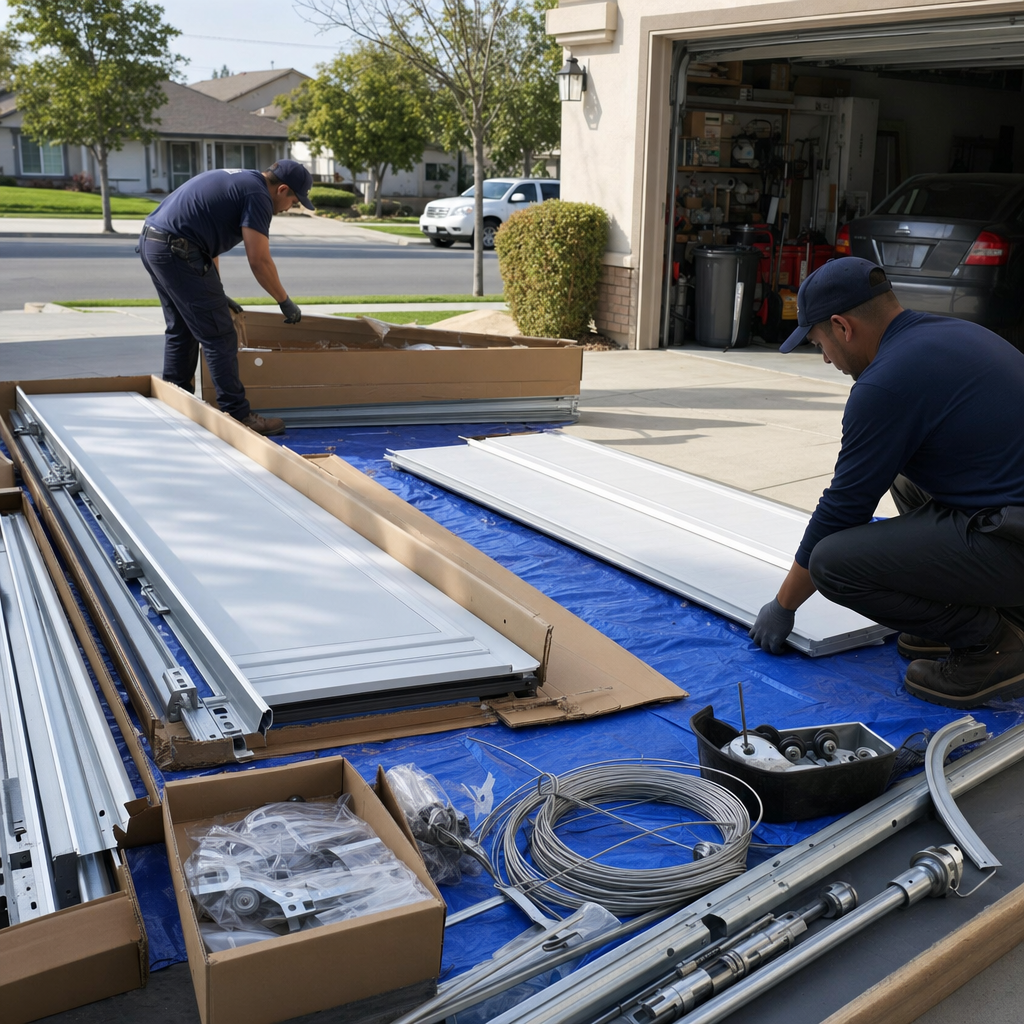
Most garage doors in Los Angeles never get their 30-day check-in. The manufacturer requires it. The installation manual calls it out in bold. But once the truck pulls away and the remote clicks the first time, homeowners forget, and installers rarely schedule the return visit. We’ve been called to homes in Silver Lake and Encino where a door has run slightly crooked for eight years because no one re-torqued the hardware while it was still settling. That first month is not a formality. It is the foundation everything else builds on.
In this guide, we’ll walk through what needs to happen after a new garage door installation, when to do it, and how the schedule changes once the break-in period ends. We’ll cover the tasks most homeowners miss, the ones you can handle yourself, and the ones that should involve a trained technician.
Quick Answer
A new garage door needs maintenance at 30 days, 6 months, and 12 months after installation, then annually after that. The first-year schedule is heavier because hardware is seating, spring tension is settling, and opener force limits need recalibration. Skip the 30-day check, and minor alignment issues become permanent wear patterns.
Table of Contents
- Why Year One Is Different from Every Year After
- The 30-Day Check-In: What Should Happen (and Usually Doesn’t)
- Months 3 Through 6: The Break-In Period
- The 12-Month Inspection: Establishing Your Baseline
- Lubrication for New Installations: What, Where, and When
- Keeping Your Installation File: The Records That Save Money Later
- Common Mistakes to Avoid
- When to Call a Professional
- Frequently Asked Questions
- The Bottom Line
Why Year One Is Different from Every Year After
A new garage door is not a finished product on day one. It is a mechanical system under load, and every component is finding its position.
The torsion spring, which carries the full weight of the door, relaxes slightly in its first few hundred cycles. The steel hinges, rollers, and track brackets settle against their fasteners. The opener’s force settings, calibrated to a stiff new door, become mismatched as the system loosens. In Los Angeles, where many installations happen during dry summer months, the metal contracts and expands through the first winter season, accelerating this seating process.
Manufacturers like Wayne Dalton and Amarr specify break-in procedures for exactly this reason. The hardware is not defective. It is adjusting. The problem is that most installation crews treat the final bolt as the end of the job, and most homeowners have no reason to know better.
After year one, maintenance becomes predictable. Springs fatigue at known rates. Rollers wear on predictable schedules. Cables fray in visible ways. But that first year is the wild card. The adjustments made at 30 days, 6 months, and 12 months determine whether the door runs straight for fifteen years or starts binding in year three.
We’ve replaced doors in Pasadena that failed at eight years because the original installer never returned for the 30-day torque check. We’ve serviced identical Amarr models in Culver City that are still running smooth at twenty years because someone paid attention in year one. The difference is not the door. It is the schedule.
The 30-Day Check-In: What Should Happen (and Usually Doesn’t)
This is the most important maintenance appointment most homeowners never schedule. At 30 days, the hardware is still seating but has not yet worn into a bad position. Corrections are quick and free under most installation warranties. Wait six months, and the same adjustment becomes a repair bill.
Three tasks belong on every 30-day checklist:
- Spring tension verification. The torsion spring loses initial tension as it beds in. A door that was perfectly balanced on installation day may drift heavy by week four. The technician should test balance with the opener disconnected and adjust spring wind to keep the door stationary at mid-travel.
- Hardware torque re-check. Every bolt and lag screw should be re-torqued to specification. Track brackets, jamb brackets, hinge fasteners, and opener mounting hardware all loosen slightly as the door cycles. In our experience, roughly 40% of 30-day returns need at least one hardware adjustment.
- Opener force limit re-calibration. The opener’s down-force and up-force settings are calibrated to a new, stiff door. As the system breaks in, the same settings become too aggressive. The door may reverse unnecessarily or fail to reverse on obstruction. A technician should run the safety reversal test and recalibrate force limits to the actual door resistance at 30 days.
If your installer did not schedule this visit, call and request it. Most reputable shops in Los Angeles include it in the installation warranty. If they refuse, that is information worth having.
Garage Door Installation in Los Angeles should include this follow-through. We include the 30-day check with every installation we perform. It is written into the job, not offered as an extra.
Months 3 Through 6: The Break-In Period
Between the 30-day check and the 6-month inspection, the door accumulates roughly 500 to 1,000 cycles in a typical Los Angeles household. This is the threshold where normal break-in wear separates from installation problems.
Normal wear in this period includes:
- Light darkening on steel hinges where they pivot, with no visible play or noise
- Minor roller track marks from nylon rollers seating into their channels
- Slight opener chain or belt stretch, corrected by the built-in tensioner
Signs of an installation problem include:
- Visible gap between roller stem and hinge barrel, indicating misalignment
- Track wear concentrated on one side, suggesting the door is running crooked
- Opener straining or clicking at the same point in travel, usually a binding issue
- Panel creasing or paint cracking at hinge lines, from uneven spring tension
The distinction matters because installation warranty periods typically end at 12 months. A problem identified at 6 months is a warranty call. The same problem reported at 14 months is a repair invoice.
During this period, homeowners should perform monthly visual checks. Stand inside the garage with the door closed and the lights on. Look at each hinge, roller, and cable anchor. Open and close the door manually once, feeling for resistance or catching. In Los Angeles, where Santa Ana winds can deposit fine dust through track gaps, wipe the tracks with a dry cloth monthly. Do not lubricate the tracks. We’ll explain why in the lubrication section below.
If anything looks or feels different from installation day, note the date and call for inspection. Photos help. We have resolved many 6-month calls in Los Angeles with a twenty-minute adjustment that would have become a spring replacement at year two.
The 12-Month Inspection: Establishing Your Baseline
At one year, the break-in period ends. The spring has found its working tension. The hardware has seated. The opener knows the door. This inspection captures the condition of a fully settled system and creates the benchmark against which all future maintenance is measured.
The 12-month inspection should include:
- Full spring tension test and balance check. The door should stay put at any point in travel when disconnected from the opener. If it drifts, the spring needs adjustment. This is the last chance under most installation warranties.
- Roller and hinge assessment. Nylon rollers should spin freely with no wobble. Steel rollers should show even wear, not flat spots. Hinges should have no visible play between leaves. Any roller or hinge showing wear gets replaced before it damages the track or panel.
- Cable and drum inspection. Lift cables should have no fraying, no kinking, and no rust. The cable drum should show clean, even winding with no cable overlap. In coastal Los Angeles neighborhoods like Venice or San Pedro, salt air accelerates cable corrosion. We inspect more carefully in these areas.
- Weather seal and bottom seal check. The rubber seal should contact the floor evenly across the full width. Gaps invite pests and allow conditioned air to escape. In Los Angeles, where energy costs are significant and rodents are active year-round, this matters more than in colder climates.
- Opener safety system test. The photo-eye alignment, force reversal, and manual release should all be tested per manufacturer specification. This is not optional. A failed safety system is a liability issue.
After this inspection, the maintenance schedule shifts. Annual service is sufficient for most residential doors in Los Angeles. High-cycle doors, commercial applications, or doors with direct sun exposure may need semi-annual checks. The technician should note any components trending toward replacement and estimate their remaining life. This is your baseline file. Keep it.
Garage Door Repair in Los Angeles becomes more predictable when you have this record. We reference our clients’ 12-month inspection notes on every subsequent call, which saves diagnostic time and reduces billable hours.
Lubrication for New Installations: What, Where, and When
New doors need lubrication, but not everywhere, and not with whatever is in the garage cabinet. The wrong product or the wrong location causes problems that look like mechanical failure.
Do not lubricate the tracks. This is the most common mistake we see in Los Angeles homes. Tracks should be clean and dry. Lubricant on the vertical or horizontal tracks collects dust, hardens into a gritty paste, and causes rollers to slip and chatter. Wipe tracks with a dry cloth. If they are grimy, use a solvent on a rag, then dry thoroughly.
Lubricate immediately at installation:
- Torsion spring. The spring is under constant tension and friction. Use a lithium-based garage door spray lubricant, not WD-40. Apply a light coat across the full length of the spring. Wipe excess. Reapply every 6 months in Los Angeles, where dry summers and occasional humidity cycles accelerate evaporation.
- Hinges. The pivot points between hinge leaves need lubrication at installation and every 6 months. Use the same lithium spray. Work the door through a few cycles to distribute. Wipe any drips before they attract dust.
- Roller bearings. Nylon rollers with sealed bearings need no lubrication. Steel rollers with exposed bearings need a drop of light machine oil at the bearing, not the shaft, every 6 months. Do not over-oil. Excess oil flings onto the door and concrete.
Opener rail lubrication depends on type. Screw-drive openers need manufacturer-specified grease on the screw. Belt-drive and chain-drive openers need no rail lubrication. The rail is a guide, not a bearing surface. Lubricating it attracts debris and accomplishes nothing.
In Los Angeles, avoid silicone-based lubricants for garage door hardware. They evaporate faster in warm, dry conditions and leave a residue that collects dust. Lithium spray is widely available at hardware stores and performs consistently in our climate.
If you are uncertain what your door needs, our $89 Seasonal Tune-Up includes full lubrication with the correct products, applied by a technician who knows the difference between a Wayne Dalton torque tube and a standard torsion system.
Keeping Your Installation File: The Records That Save Money Later
Every garage door repair goes faster and costs less when the technician knows what they are working with. Most homeowners cannot describe their door beyond “it’s white” and “it has a remote.” The installation file fixes this.
Create a simple folder, physical or digital, with these items:
- Installation invoice with date and company. This establishes warranty status and identifies who to call if problems trace to the original work.
- Door model and serial number. Usually found on a sticker on the interior face of the bottom panel or end stile. For Amarr, Wayne Dalton, or Raynor doors, this determines panel availability if a section is damaged.
- Spring specifications. Wire size, inner diameter, length, and wind direction. A photo of the spring with a tape measure is useful. This eliminates guesswork on replacement calls.
- Opener model and manufacture date. Located on the motor unit. Determines remote compatibility, safety features, and parts availability.
- All 30-day, 6-month, and 12-month inspection notes. The condition recorded at each visit shows wear trends and predicts component life.
When you call for service, read the model information to the dispatcher. A technician who knows they are working with a 2023 Craftsman belt-drive and a 16×7 Amarr Stratford can load the right parts before leaving the shop. In Los Angeles traffic, that saves everyone an hour.
We keep digital records for every Mainspring Garage Door Co. home installation and service call. But we also encourage homeowners to maintain their own file. If you sell the house, the file transfers to the next owner. If you call a different company in an emergency, you have the facts they need.
Garage Door Opener in Los Angeles service is particularly model-dependent. A LiftMaster 8500W and a Chamberlain B970 share a parent company but need different remotes, different logic boards, and different diagnostic procedures. The model number in your file eliminates confusion.
Common Mistakes to Avoid
- Skipping the 30-day check because the door “seems fine.” The door can seem fine while running slightly crooked, wearing one roller faster than the other. By the time noise appears, the damage is done.
- Lubricating the tracks. We see this in Los Angeles garages every week. Clean tracks are quiet tracks. Oiled tracks are dusty, gritty tracks that cause roller slip and premature wear.
- Ignoring opener force settings after break-in. An opener calibrated to a stiff new door will strain against a settled door, or fail to reverse on obstruction. Test the reversal monthly with a 2×4 laid flat in the door path.
- Using the wrong lubricant. WD-40 is a solvent, not a lubricant. It displaces water and evaporates, leaving metal unprotected. Use lithium-based garage door spray or manufacturer-specified products.
- Waiting for noise before calling. A well-maintained door runs quiet. Noise is a late symptom. Schedule maintenance by the calendar, not by the decibel level.
- Discarding installation paperwork. The warranty, model numbers, and specifications in that packet are worth more than the door itself when something breaks at year seven.
When to Call a Professional
Some maintenance is homeowner work. Visual checks, track cleaning, and lubrication of accessible hinge points are reasonable for a careful DIYer. Other tasks carry genuine risk and require training and tools.
Do not attempt to adjust torsion springs. The spring stores enough torque to cause serious injury or death. The winding cones, set screws, and cable anchors are not user-serviceable. The same applies to cable replacement and bottom bracket adjustment on a door under spring tension.
Call a professional if the door reverses unexpectedly, binds in travel, makes grinding or popping sounds, or if any panel shows damage. Call immediately if a cable is frayed or a spring is broken. A door with a failed spring is dangerous to operate manually and can damage the opener.
Mainspring Garage Door Co. offers free estimates in Los Angeles. Call (844) 755-5838. Our technicians arrive with springs, cables, rollers, and openers on the truck, and most jobs are completed in a single visit. The 90-Day Done Right Promise covers every completed job in writing. If it is not right, we come back at no charge.
Frequently Asked Questions
A new garage door should be checked at 30 days, 6 months, and 12 months after installation, then annually after that. The first-year schedule is heavier because hardware is still seating and spring tension is settling. Call (844) 755-5838 to schedule your first-year inspections with Mainspring Garage Door Co.
Skipping the 30-day check allows hardware to settle into misalignment and spring tension to drift uncorrected. Minor issues that would take minutes to fix become permanent wear patterns that shorten component life. In our experience across Los Angeles, doors that miss the 30-day check need major repairs two to three years earlier than doors that receive it.
Yes, for accessible hinge points and the torsion spring, using lithium-based garage door spray. Do not lubricate the tracks, do not use WD-40, and do not attempt to lubricate roller bearings on a door under spring tension. If you are uncertain, our $89 Seasonal Tune-Up includes proper lubrication by a trained technician.
Check your installation invoice for the completion date and warranty terms. Most Los Angeles installers cover labor and adjustments for 12 months from installation. Keep your paperwork. If you cannot locate it, call the installation company with your address; they should have records.
A properly installed new door should run quiet, with only light mechanical sound from the opener motor and rollers. Popping, grinding, or squealing in the first year indicates a problem: loose hardware, incorrect spring tension, or binding in the track. Schedule inspection promptly. Noise is not a normal break-in symptom.
After year one, the schedule simplifies to annual service. Spring tension checks remain important but become more predictable. Roller and hinge wear replaces hardware settling as the primary concern. Weather seal and safety system checks continue unchanged. The 12-month baseline inspection gives your technician the reference point for all subsequent visits.
The Bottom Line
A garage door installation is not finished when the installer leaves. The first year is a distinct maintenance phase with its own schedule, its own risks, and its own opportunities to prevent long-term problems. The 30-day check-in, the 6-month wear assessment, and the 12-month baseline inspection are not upsells. They are the manufacturer-specified path to a door that runs right for its full design life.
Most homeowners in Los Angeles never hear about this schedule. Their doors work adequately for years, then fail early, and no one connects the failure to the missed 30-day torque check a decade before. The connection is real. We’ve seen it hundreds of times.
Keep your installation file. Lubricate what should be lubricated, leave dry what should be dry, and schedule the inspections that matter. The door will reward the attention.
For a free estimate on installation, maintenance, or repair, call Mainspring Garage Door Co. at (844) 755-5838. Phones are answered by a live person, 24/7, including nights, weekends, and holidays. Most jobs are completed in a single visit. Every completed job is covered by our 90-Day Done Right Promise, in writing, with no dispute process.
Written by the team at Mainspring Garage Door Co., serving Los Angeles since 2016.