
Last updated July 26, 2026
Garage Door Repair Maintenance Checklist for Los Angeles Homeowners
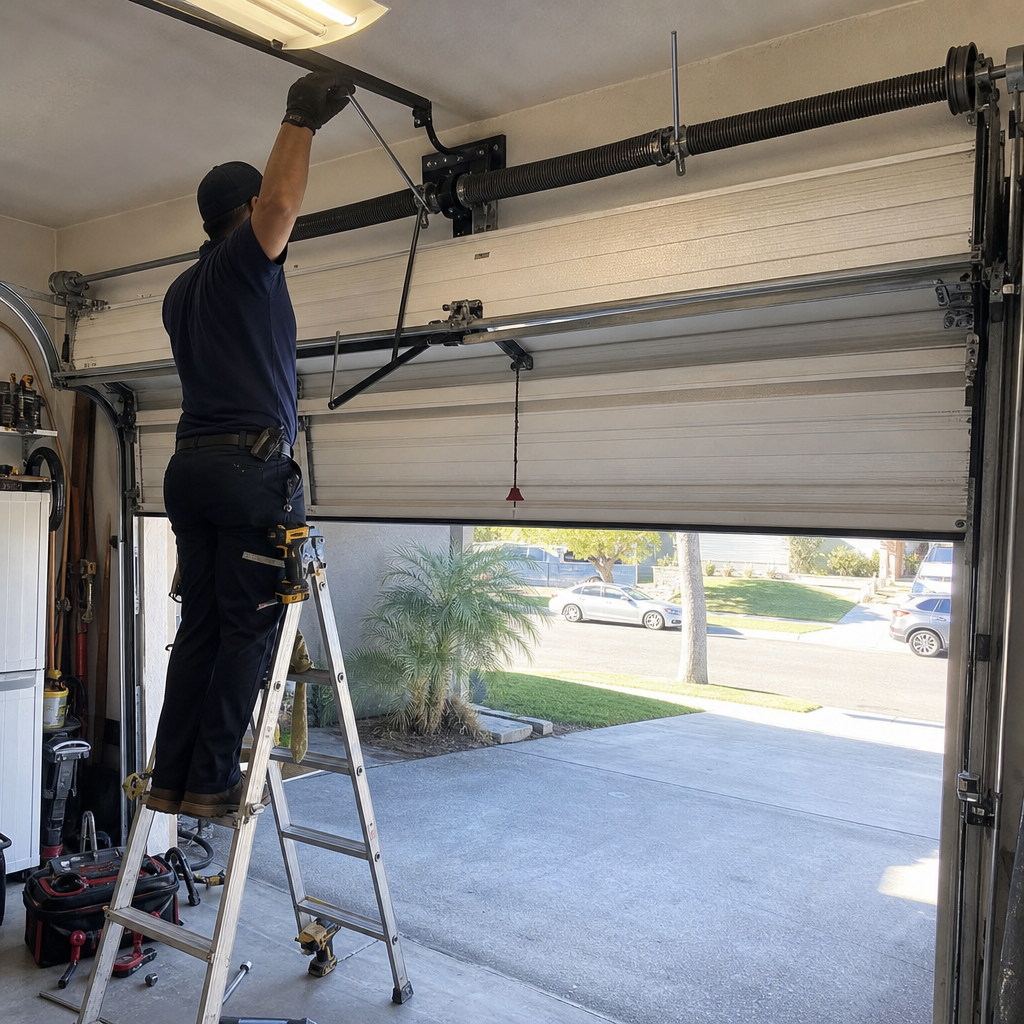
A garage door has 12 to 15 moving parts that wear at different rates. In Los Angeles, the part most likely to fail first depends entirely on which side of the 405 you live on. Homeowners in the San Fernando Valley replace springs after Santa Ana wind events. Coastal residents from Venice to San Pedro deal with corrosion on hardware the inland folks never see. This guide gives you a maintenance checklist built for the actual conditions your door faces - organized by how often to do each task, with clear guidance on what’s safe to handle yourself and what requires a trained technician.
Quick Answer
Los Angeles homeowners should inspect garage door balance, tracks, and weather seals monthly; lubricate rollers, hinges, and springs every six months; and schedule a professional safety check annually. Coastal properties need quarterly corrosion checks on fasteners and bottom brackets due to marine layer exposure. High-wind areas require post-event inspection of panels, seals, and opener force settings after each Santa Ana event.
Table of Contents
- Monthly Inspection Tasks
- Quarterly Tasks for Coastal Los Angeles Homes
- Semi-Annual Maintenance
- Annual Professional Safety Check
- Post-Santa Ana Wind Event Inspection
- What You Can Safely Do vs. What Requires a Technician
- How to Document Condition for Accurate Quotes
- Common Mistakes to Avoid
- When to Call a Professional
- Frequently Asked Questions
Monthly Inspection Tasks
These five checks take under ten minutes and catch problems before they strand your car or damage the door.
1. Visual Track Inspection
Look at the vertical tracks on both sides of the door. They should be plumb and parallel, with no dents, gaps where they mount to the wall, or accumulated debris. In Los Angeles, dust from construction and hillside runoff builds up faster than most homeowners expect. Wipe tracks with a dry cloth - never use lubricant here, as grease attracts grit and causes binding.
Check the horizontal track sections where the door curves overhead. We’ve seen doors in hillside homes from Los Feliz to the Hollywood Hills where settling foundations gradually pull tracks out of alignment. A gap as small as a quarter inch between track and roller can cause the door to hang and wear cables unevenly.
2. Spring Tension Test (Visual Only)
Look at the torsion spring above the door, or the extension springs along the horizontal tracks. Check for:
- Gaps between coils in a torsion spring (indicates loss of tension)
- Visible rust or corrosion, especially on coastal properties
- Frayed cables or cable slack
- Any sign the spring has been modified or has added clamps
Do not touch the spring or cables. A standard torsion spring holds enough stored energy to cause serious injury or death if mishandled. This is a visual check only. If you see gaps, rust, or cable wear, call a professional.
3. Reversal Test
Place a 2×4 board flat on the ground where the door meets the floor. Close the door using the opener. It should reverse within two seconds of contact. If it doesn’t, the opener force setting needs adjustment. This is required under federal safety standards and Los Angeles building code for all automatic door systems.
4. Seal and Weatherstripping Check
Inspect the rubber seal along the bottom of the door and the vinyl or brush seals on the sides and top. In Los Angeles, UV exposure degrades these faster than in cooler climates. A compromised bottom seal lets dust, rodents, and water into the garage - we’ve replaced water-damaged drywall in garages from Culver City to Pasadena where a failed seal went unnoticed through winter rains.
5. Opener Remote and Wall Button
Test both controls. If the remote requires multiple presses or works only at close range, replace the battery first. Persistent issues may indicate logic board problems, common in older units exposed to heat in unventilated Los Angeles garages.
Quarterly Tasks for Coastal Los Angeles Homes
Properties within five miles of the Pacific - from Malibu through the South Bay to Long Beach - face accelerated corrosion from marine layer moisture and salt air. These checks address what inland homeowners rarely encounter.
Fastener and Hardware Inspection
Examine hinges, rollers, and brackets for rust or oxidation. The bottom brackets (where cables attach near the floor) corrode first because they’re closest to ground moisture and salt spray. In our experience, homes in Redondo Beach and San Pedro see bottom bracket failure 3-4 years earlier than comparable inland installations.
Check the spring anchor bracket mounted to the header wall. This bracket holds the full spring tension, and corrosion here is a genuine safety hazard. Surface rust can be noted; anything that flakes or pits requires professional evaluation.
Lubricant Selection for Marine Environments
Standard lithium grease breaks down faster in salt air. We use and recommend silicone-based lubricants for coastal Los Angeles properties - they resist washout and don’t attract sand the way petroleum products do.
Panel Surface and Paint Condition
Steel doors in coastal zones develop pinhole rust where the finish is compromised. Caught early, touch-up paint prevents panel replacement. Amarr and Wayne Dalton doors use galvanized steel with baked-on finishes that hold up well, but no finish is permanent against salt air without attention.
Semi-Annual Maintenance
Every six months, typically March and September in Los Angeles, perform these deeper maintenance tasks.
Lubrication Protocol
- Hinges: Apply small amount to pivot points. Wipe excess - over-lubrication attracts dust.
- Roller bearings: Lubricate steel rollers at the bearing; nylon rollers need no lubrication.
- Torsion spring: Light coat across the coils reduces friction and corrosion. Do not attempt to wind, unwind, or adjust the spring.
- Lock mechanism: If your door has a manual lock, lubricate the cylinder and bolt.
- Opener chain or screw: Consult your manual - some Craftsman and Raynor screw-drive units use specific lubricants, and the wrong product causes premature wear.
Balance Test
Disconnect the opener by pulling the red release cord. Manually lift the door to waist height and release. A properly balanced door stays in place or drifts slowly. If it falls closed or shoots upward, the spring tension is incorrect. This test reveals balance problems before they burn out your opener motor.
Warning: The release cord is safe to pull. Do not attempt to adjust spring tension yourself.
Photo Eye Alignment and Cleaning
The safety sensors near the floor on both sides must face each other directly. Clean lenses with a soft cloth - spider webs and dust are the leading cause of false obstruction signals. In Los Angeles, hard water from sprinklers leaves mineral deposits that distort the beam; vinegar on a cloth removes these effectively.
Weather Seal Replacement Check
Bottom seals typically last 2-3 years in Los Angeles sun. If the seal is cracked, flattened, or no longer contacts the floor evenly, replacement is straightforward for most door types and prevents water intrusion during winter storms.
Annual Professional Safety Check
Some systems require trained evaluation. We recommend scheduling this check before summer heat or winter rains stress the system further.
A qualified technician should:
- Measure spring tension with a winding bar and compare to door weight
- Inspect cable condition including the often-overlooked cable drums
- Test opener force and limit settings with calibrated equipment
- Check door panel structural integrity, especially for wood doors in humid microclimates
- Evaluate track mounting and fastener torque - earthquake country requires secure attachment
- Assess opener motor amp draw; rising draw indicates mechanical resistance developing somewhere in the system
Our Garage Door Repair in Los Angeles service includes this full safety evaluation. The $89 Seasonal Tune-Up covers all listed items with no additional diagnostic fees.
Post-Santa Ana Wind Event Inspection
The Santa Ana winds that sweep through Los Angeles from September through April create unique stress on garage doors. Sustained 40-60 mph gusts, with peak speeds exceeding 80 mph in canyon corridors, test every weakness in the system.
Immediate Post-Event Check (Same Day)
- Panel damage: Walk the exterior and interior of the closed door. Look for dents, creases, or popped seams between sections. Wind-borne debris is the common cause; we’ve replaced panels after palm fronds and even roof tiles struck doors in Woodland Hills and Granada Hills.
- Seal displacement: High pressure differentials can pull bottom seals partially from their retainer. A seal hanging below the door edge will tear on the next operation.
- Opener rail and header mount: Wind loading on the door transfers to the opener mounting. Check for loosened lag bolts or separation between the header bracket and wall.
- Track alignment: Forceful door movement against misaligned tracks bends the vertical sections. Operate the door manually (disconnected from opener) and feel for binding or rough spots.
Within One Week
Re-test the auto-reverse function. Wind-driven dust can coat photo eye lenses. Check opener force settings - if the door fought wind resistance during the event, the motor may have self-adjusted to higher force, creating a safety hazard for normal operation.
Inspect weatherstripping on all four sides. The flexible vinyl or brush seals on the jambs compress permanently after sustained wind pressure and may need replacement to restore proper seal.
What You Can Safely Do vs. What Requires a Technician
This distinction matters for safety and warranty preservation.
Homeowner-Safe Tasks
- Visual inspection of all components
- Lubrication of hinges, rollers (steel type only), and lock mechanisms
- Photo eye cleaning and alignment
- Remote battery replacement
- Bottom seal replacement on standard retainer types
- Weatherstripping on jambs and header
- Manual operation test and balance observation
Trained-Technician-Only Tasks
- Spring adjustment, repair, or replacement - torsion springs store lethal energy
- Cable replacement or drum adjustment - cables are under full spring tension
- Bottom bracket replacement - these brackets anchor the cable system under tension
- Track realignment or replacement - improper geometry causes binding and premature wear
- Opener logic board or force setting programming - incorrect settings create entrapment risk
- Panel replacement on doors with integrated windows or custom profiles
We’ve responded to emergency calls in Los Angeles where a homeowner’s well-intentioned repair attempt made the problem worse and more expensive. The 90-Day Done Right Promise covers our work; it cannot cover DIY modifications that damage the system.
How to Document Condition for Accurate Quotes
A clear photo set sent before the technician arrives eliminates surprises and allows accurate phone estimates.
Photo Checklist
- Wide shot of full door, closed, from outside: Shows panel style, condition, and installation context.
- Wide shot of full door, closed, from inside: Reveals spring type, opener model, and track configuration.
- Close-up of spring assembly: Torsion spring from the side, showing coil condition and winding cone. Extension springs from below, showing pulley and safety cable arrangement.
- Close-up of opener unit: Manufacturer label with model number and date code, typically on the motor housing.
- Problem area detail: Whatever you’ve observed - damaged panel, frayed cable, misaligned track, etc.
- Track mounting at header and floor: Shows bracket condition and attachment security.
Email these to the company before scheduling. At Mainspring Garage Door Co. home, we review photos at no charge and provide estimates that hold unless we find additional problems on arrival. The Free Second Opinion on any written estimate applies if you’ve already received a quote elsewhere and want comparison.
Common Mistakes to Avoid
- Using WD-40 as garage door lubricant. WD-40 is a solvent and light penetrant, not a lubricant. It displaces existing grease and leaves metal unprotected. Use lithium or silicone grease formulated for door hardware.
- Ignoring a slow-opening door. A door that takes noticeably longer to open is working against increased resistance - usually spring tension loss or track binding. The opener motor compensates until it fails entirely, turning a spring adjustment into a spring-plus-opener replacement.
- Adjusting opener force settings without testing balance first. If the door is unbalanced, raising opener force masks the root problem and creates a crushing hazard. Always verify door balance before any opener adjustment.
- Leaving a damaged door operated by the opener. A bent panel or derailed roller stresses the opener rail and motor. In Los Angeles, where many garages house second refrigerators or workshop equipment, the cost of a seized opener exceeds the cost of addressing the door problem promptly.
- Neglecting coastal corrosion until failure. Rust on bottom brackets progresses from surface to structural faster in marine air. Quarterly inspection catches it when touch-up treatment suffices; annual inspection often finds replacement necessary.
- DIY spring replacement from online tutorials. The tutorials rarely show the injuries. We’ve been called to homes in Los Angeles where the homeowner or a handyman was injured attempting this. The parts cost less than $100; emergency room visits and permanent damage cost far more.
- Assuming all openers use the same lubricant. Craftsman chain-drive units use specific chain lube; Raynor screw-drive openers require particular compounds. Wrong products void warranty and damage drive mechanisms.
When to Call a Professional
Call a trained technician when you observe spring gaps or rust, cable fraying or slack, door imbalance, opener strain or failure, panel damage affecting operation, or track misalignment beyond minor debris. Any situation involving spring tension, cable systems, or opener force programming requires proper tools and training.
Mainspring Garage Door Co. offers free estimates in Los Angeles - call (844) 755-5838. A live person answers, including nights, weekends, and holidays. Most repairs are completed in a single visit because our trucks carry springs, cables, and openers for all major brands. The flat price is stated before any work begins. Every job carries the 90-Day Done Right Promise in writing.
Frequently Asked Questions
Monthly visual inspection, semi-annual lubrication and balance testing, and annual professional safety evaluation. Coastal properties from Santa Monica to San Pedro need quarterly corrosion checks on hardware. Call (844) 755-5838 to schedule the $89 Seasonal Tune-Up.
It damages them directly and indirectly. Direct damage comes from wind-borne debris and pressure differentials that stress panels and seals. Indirect damage occurs when owners force openers to operate against wind resistance, burning out motors and distorting tracks. We’ve replaced panels in Chatsworth and realigned tracks in Porter Ranch after single wind events.
Repair is typically more economical for doors under 15 years with isolated panel damage, spring failure, or opener problems. Replacement becomes the better value when multiple panels are damaged, the door is outdated and lacks safety features, or repair costs exceed 50% of replacement. We provide both options with upfront pricing so you can decide. Call (844) 755-5838 for a free estimate.
You can apply light lubricant to the spring coils from a safe distance using the spray straw. Do not touch the spring, attempt to wind or unwind it, or place any body part near the winding cones. If the spring shows gaps between coils or significant rust, call a professional - the spring has lost tension and requires replacement, not lubrication.
Los Angeles garage temperatures regularly exceed 110°F in summer, causing thermal expansion in metal components and increased resistance in older opener motors. The opener works harder against weakened springs and expanded tracks. If the problem is seasonal and resolves in cooler weather, schedule maintenance before the next heat cycle - the strain is cumulative and will cause permanent failure.
First, verify the opener has power - check the outlet and breaker. If the motor hums but the door doesn’t move, the spring has likely failed and the opener cannot lift the door’s full weight. Pull the red emergency release cord (when the door is closed) to disconnect the opener, then lift manually - a properly balanced door weighs 10-15 pounds. If you cannot lift it, or if the door is open and won’t stay up, the spring is broken. Do not force the opener. Call for emergency service. Mainspring answers live 24/7 at (844) 755-5838.
The Bottom Line
Garage door maintenance in Los Angeles is not generic - it’s specific to coastal corrosion, valley heat, and canyon wind. The checklist above organizes tasks by frequency and safety level so you know what to do, when to do it, and when to step back. Document problems with photos, address them before they cascade, and build a relationship with a local company that will still answer the phone in five years. Your garage door operates 1,500 times a year on average. A few minutes of attention each month prevents the inconvenience and cost of a failed system.
For installation of a new door or opener system, see our Garage Door Installation in Los Angeles page. For opener-specific service, visit Garage Door Opener in Los Angeles.
Ready to schedule maintenance or need a professional evaluation? Call Mainspring Garage Door Co. at (844) 755-5838. A live person will answer, we’ll state the flat price before any work begins, and we’ll stand behind the repair with our 90-Day Done Right Promise in writing. Seniors and veterans receive a permanent 5% discount. We’ve been serving Los Angeles homeowners since 1984 - we’ll be here when you need us.
Written by the team at Mainspring Garage Door Co., serving Los Angeles since 2016.